Winter around Buffalo, NY puts garage doors through a lot. Between heavy snow, frozen parts, and constant temperature swings, it’s no surprise we get calls once cold weather settles in. When doors stop working like they should, one question always comes up fast: should we repair it, or is it better to go ahead and replace it?
That decision isn’t always simple, and winter adds its own set of challenges. Cold air can make small problems happen faster, and waiting too long to deal with them can mean getting stuck in more than just snow. That’s why we take a close look at how overhead door repair holds up in winter, and when a replacement might actually save time down the road.
Signs Your Overhead Door Might Need Attention
Not every problem looks like a big one at first. But winter tends to make worn parts fail faster, and small red flags can lead to bigger ones if we don’t step in early. Some of the most common warning signs show up slowly, and others hit all at once.
- If the door starts making strange noises when moving, like popping or grinding, that usually means something is out of place or under stress.
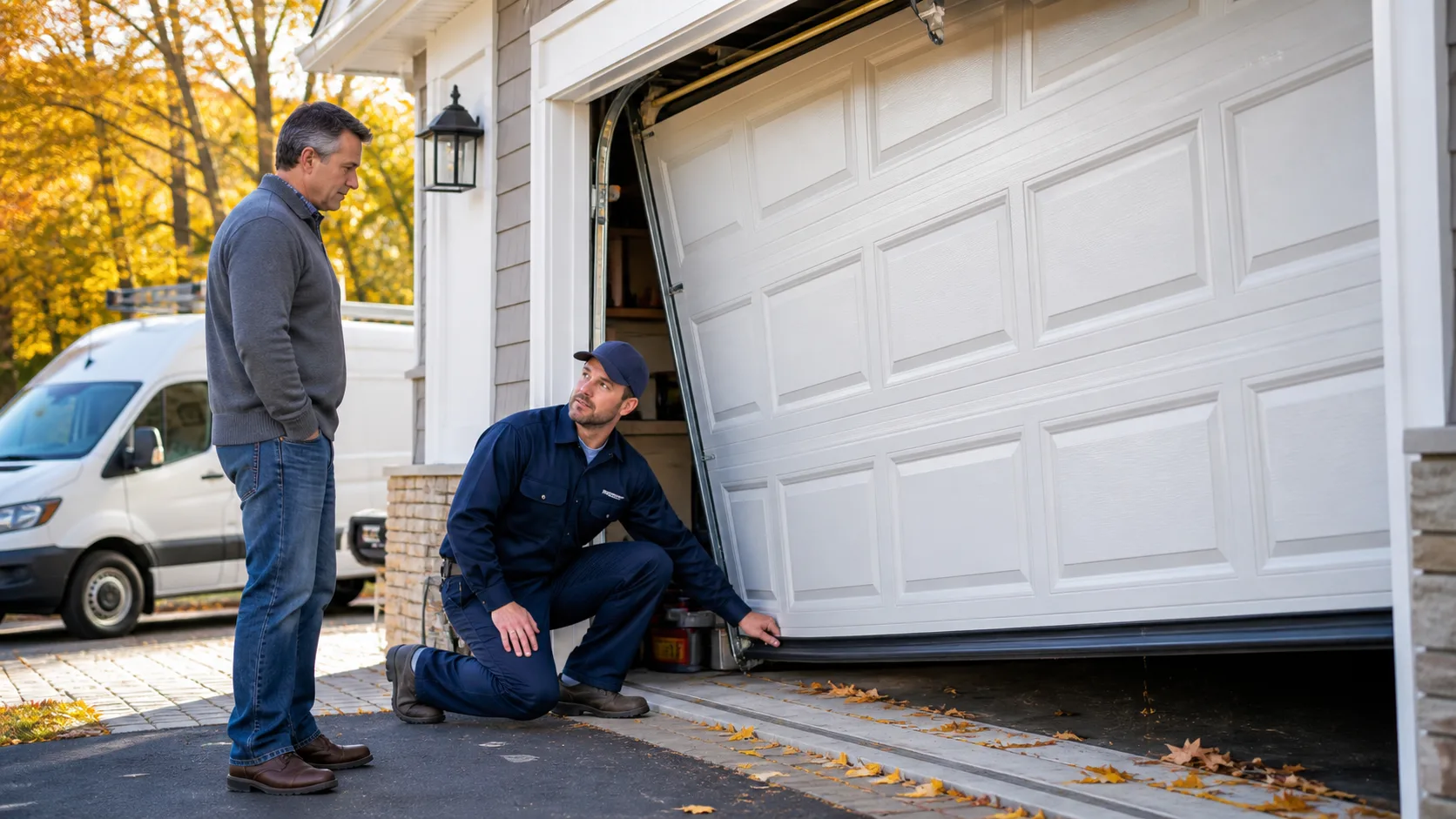
- A door that moves unevenly or gets stuck on one side can signal a frayed cable or bent track.
- Ice buildup at the bottom can stop the door from fully closing, and over time, frozen slush can warp seals or throw the door off its path.
- If the opener is working harder than usual or quits in the middle of a cycle, it may be dealing with more resistance than it should.
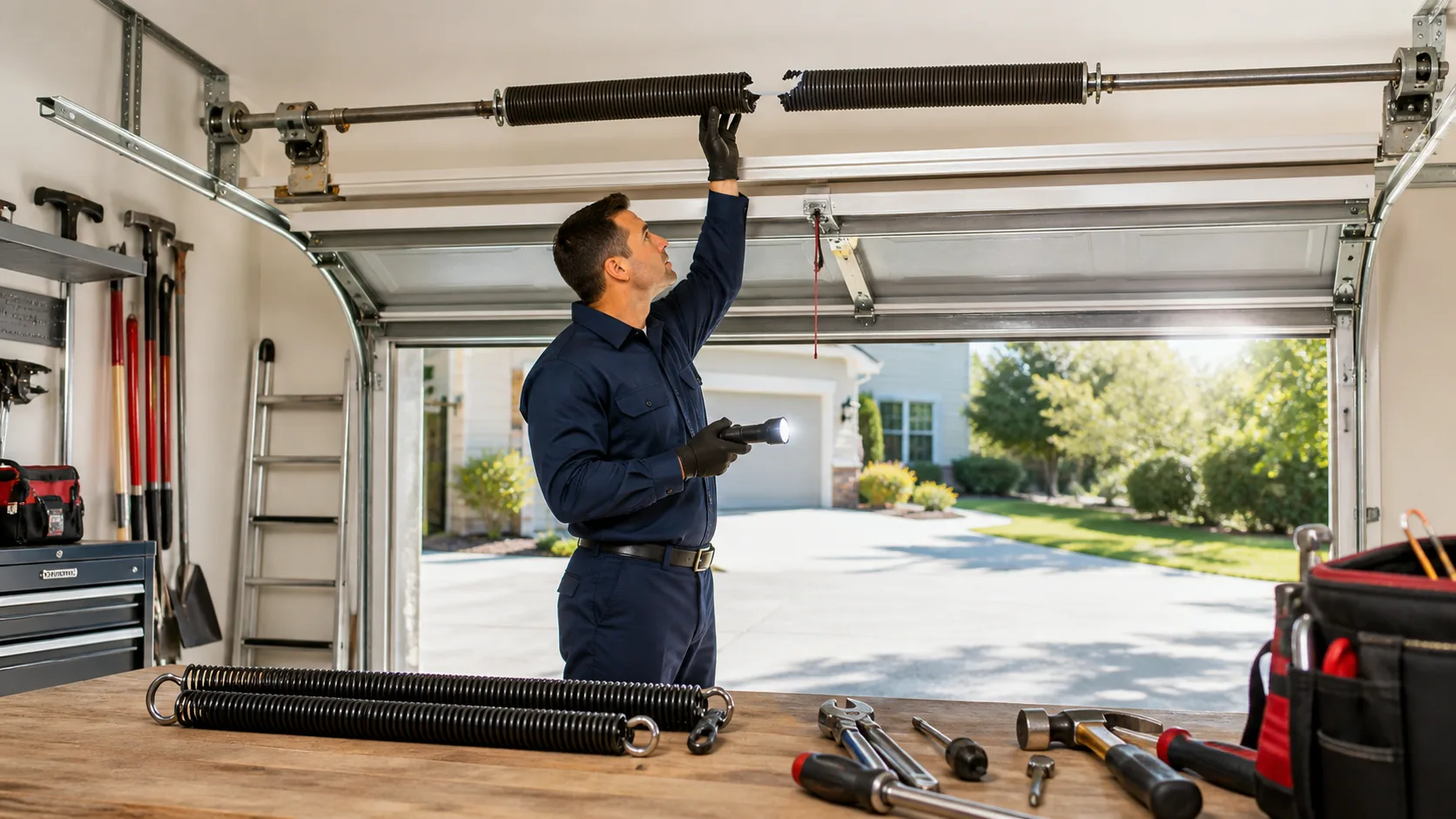
These issues become more serious in winter. Cold metal is less forgiving, and if a cable or spring snaps, the door may not open at all. On top of that, an unsealed garage lets cold air into the house and puts extra work on your heating system.
How Cold Weather Impacts Repair vs. Replacement Decisions
Winter changes how we look at every part of a garage door. Springs, hinges, and openers react differently when it’s freezing. Even well-maintained doors sometimes shift out of alignment because metal contracts in the cold.
- Parts like rollers or cables might slow down or lock up because of ice buildup or frozen grease in the tracks.
- Plastic or rubber parts, such as seals or weatherstripping, can crack or stop flexing, leading to poor insulation or gaps that let in drafts.
- Repairs that work well in summer may need a closer look during winter if the cold keeps undoing them.
If a door keeps needing fixes year after year, or if the same part keeps failing every winter, then a replacement might hold up better over time. We always try to weigh how long a repair will last against what the coming months will throw at it.
When a Repair Makes Sense
There are lots of situations where repair is the better path, even in the cold. If the structure of the door is strong and most parts are holding up well, then swapping out a damaged cable or tightening a track may be all it needs. Sometimes the opener needs adjusting or reset after a power blip or ice jam.
Overhead door repair is a good option when:
- The problem is small and limited, like a worn roller, bent track, or misaligned sensor.
- The door is fairly new or has no rust, cracks, or major dents.
- Repairs can be done safely without forcing parts that are frozen in place.
Fast action helps. A frozen cable or spring under stress can quickly turn into a full failure. Getting the job done early in the season often avoids more complex issues later.
When Replacement Is the Smarter Choice
Some issues stretch beyond what a quick fix can solve. In cold months, we see older doors that just can’t meet the demands of daily use anymore, especially when they’ve had patchwork repairs over the years. In these cases, replacing the whole door may save time, stress, and future trouble.
Here’s when we usually recommend thinking about replacement:
- When rust has weakened key parts or the door panels themselves
- If the door struggles to keep out cold or drafts, even with updates
- When heavy repairs have already been done, multiple spring or cable replacements might point to larger wear underneath
Newer doors come with better materials, better weather seals, and hardware that can handle repeated freeze and thaw conditions. Replacing before the deep freeze hits can prevent a frustrating breakdown in the middle of winter.
A Clearer Path for Cold-Weather Door Decisions
Winter doesn’t give garage doors much grace. Things that seemed fine back in fall may start acting up, loudly and suddenly. Knowing whether to repair or replace depends on how your door is holding up under the pressure of snow, salt, and freezing wind.
When problems show up, whether it’s a jammed opener, a door off-track, or a strange sound at sundown, it helps to make the right call early. Small issues in cold weather don’t usually stay small for long. Taking care of them now can keep your winter routine running steady, and keep your bad-weather surprises to a minimum.
Winter weather in Buffalo, NY can push an aging garage door to its limits, and waiting too long to fix it can make things worse fast. If your door is moving oddly, sagging on one side, or suddenly refusing to open, it’s time to have a professional take a look. We understand how cold, snow-packed days create extra trouble for local homeowners and why quick responses make all the difference. For reliable fixes that hold up through every deep freeze, our team is ready to help with overhead door repair. Call Bartlett Overhead Door today to book your service before the next storm rolls in.