Garage door springs carry most of the door’s weight every time it opens or closes. When a spring breaks, the door can become dangerously heavy, trap a vehicle inside, or place too much strain on the opener. A broken garage door spring is a safety concern, not just an inconvenience.
We often hear about a loud bang in the garage, a door that rises only a few inches, or an opener that hums without moving the door. These problems can happen suddenly, especially after years of daily use. We help homeowners throughout Buffalo, Tonawanda, and Western New York understand what went wrong and when it is no longer safe to use the door.
Protect Your Door Before a Small Spring Problem Grows
Springs do the heavy lifting for your garage door. The opener guides the door through its travel, but it is not meant to pull the full weight of the door by itself. When spring support is lost, repeated attempts to run the opener can damage the motor, gears, cables, and other parts.
A failing spring may give you warning signs before it breaks completely. Pay attention if the door begins acting differently than usual, including:
- A loud bang that comes from the garage
- A door that opens unevenly or only partway
- A door that suddenly feels very heavy
- An opener that runs or hums without lifting the door
- Squeaking, grinding, or jerky movement during operation
These symptoms do not always mean the same part has failed, but they do mean the door needs attention. We recommend treating unusual movement or noise as a reason to stop and have the system inspected before a small problem turns into a stuck or unsafe door.
How Torsion and Extension Springs Work
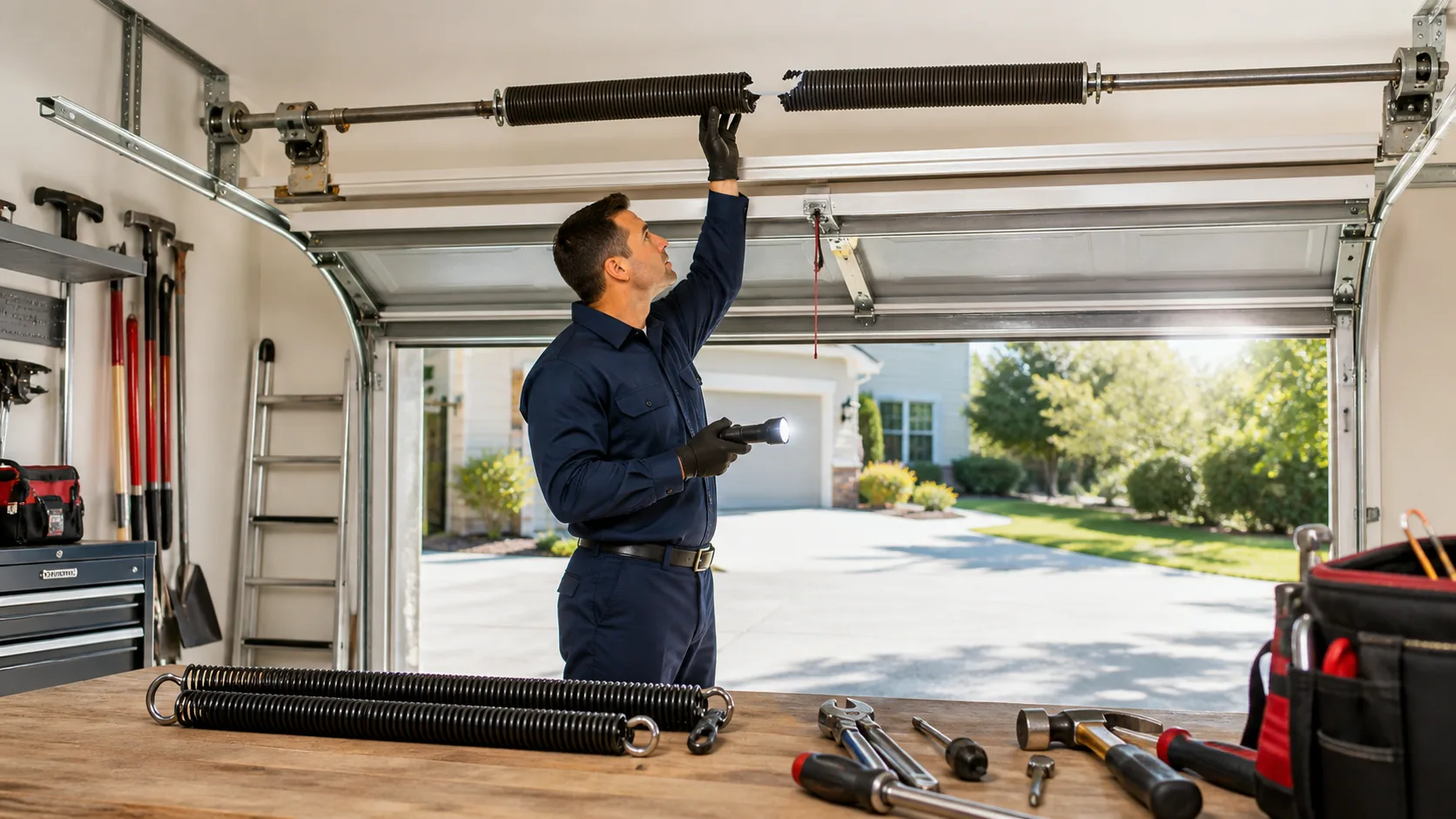
Torsion springs are mounted on a metal shaft above the garage door opening. As the door closes, the springs twist and store energy. When the door opens, that stored rotational force helps lift the door. Many modern residential doors use torsion springs because they can provide smooth, controlled lifting when they are properly matched to the door.
Extension springs work differently. These springs sit along the horizontal tracks on each side of the garage door. They stretch as the door closes and contract as it opens, helping support the door’s weight. An extension spring system should include safety cables that run through the springs. If a spring breaks, the cable helps contain it rather than allowing it to fly through the garage.
Neither type is automatically right for every home. Torsion springs may offer smoother operation and can be selected for a longer expected cycle life. Extension springs can work well where the door system and available space call for them. The correct choice depends on details such as the door’s weight, height, track setup, and hardware. Our technicians inspect the complete system before determining what replacement spring is appropriate.
When a Broken Garage Door Spring Needs Professional Help
A broken torsion spring may show a clear gap in the coil above the door. On an extension system, one spring might hang loose, look stretched differently, or no longer match the other side. You can look from a safe distance, but do not touch the springs, cables, brackets, or shaft.
Operating symptoms are often even more noticeable than visual ones. Without the spring’s help, the door may stop partway, rise crookedly, or refuse to open with the wall button or remote. If you disconnect the opener and attempt to lift the door, it can feel far heavier than expected.
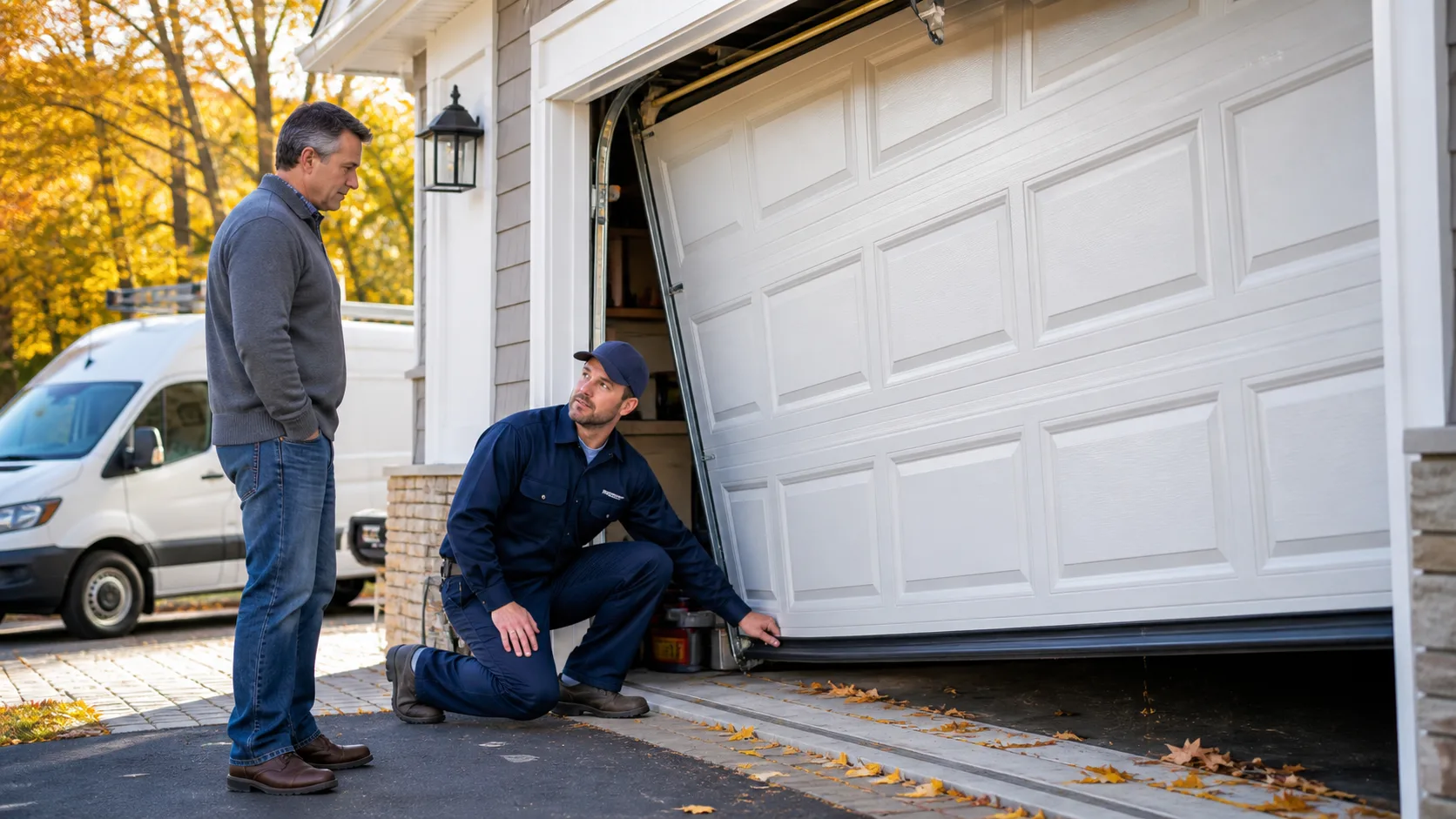
Stop using the door if you suspect a broken garage door spring. Avoid forcing it open, repeatedly pressing the opener button, or disconnecting the opener while the door is raised. A door that is out of balance can move or fall quickly, putting people, vehicles, and property at risk.
Why Spring Repairs Are Not a DIY Project
Garage door springs hold a great deal of tension, even when the door is closed. Trying to wind, unwind, remove, or replace one without the right equipment and training can lead to serious injuries. Torsion springs are especially hazardous because they must be tensioned precisely and secured correctly to the shaft, cables, and drums.
Spring repair is also about more than changing one part. During service, we evaluate the whole counterbalance system, including:
- Spring type, size, length, and condition
- Door weight and how the door moves through its travel
- Cables, drums, rollers, tracks, and brackets
- Opener settings and signs of excess strain
- Whether the door is balanced correctly after repair
Once replacement is complete, the door should move smoothly and stay in place when it is partially open. Correct balance protects the opener, reduces wear on connected parts, and supports dependable day-to-day operation.
Prepare Your Garage Door for Colder Weather
Fall is a smart time to pay attention to garage door performance. As colder weather arrives, many of us use the garage more often for indoor parking, seasonal storage, and keeping snow and ice away from vehicles. That added use can reveal a spring that is already close to failing.
Cold temperatures can make existing problems more noticeable. Thickened lubricant, dirty tracks, worn rollers, and a poorly balanced door can all add resistance. When a tired spring is asked to lift a heavy door under those conditions, it may no longer provide the support the system needs.
Keep an eye on how the door sounds and moves as the season changes. Uneven travel, grinding noises, damaged weatherstripping, or debris around the tracks are all reasons to have the door checked. Most importantly, never ignore a door that suddenly becomes heavy or will not open normally. Prompt professional service can help prevent a broken spring from becoming a larger garage door problem when winter weather arrives.
Restore Safe, Reliable Door Operation
Barlett Overhead Door can inspect the spring system, identify the cause of the issue, and recommend the right repair. Get professional help for a broken garage door spring before it disrupts your daily routine. To arrange service with our team, contact us today.