A garage door that sags, leans, or bows is more than an eyesore. It can be a sign that the door is no longer being supported evenly, and cold weather may make that problem harder to ignore. Before winter arrives, we recommend taking unusual movement, visible gaps, and noisy operation seriously so a small issue does not become a no-access emergency during freezing conditions.
A sagging door can drag across the floor, strain the opener, or leave your garage less protected from wind and moisture. For property owners in Buffalo, Tonawanda, and throughout Western New York, fall is a practical time to address these concerns before snow, ice, and freezing temperatures add more resistance to the system.
Stop a Sagging Door Before Winter Weather Makes It Worse
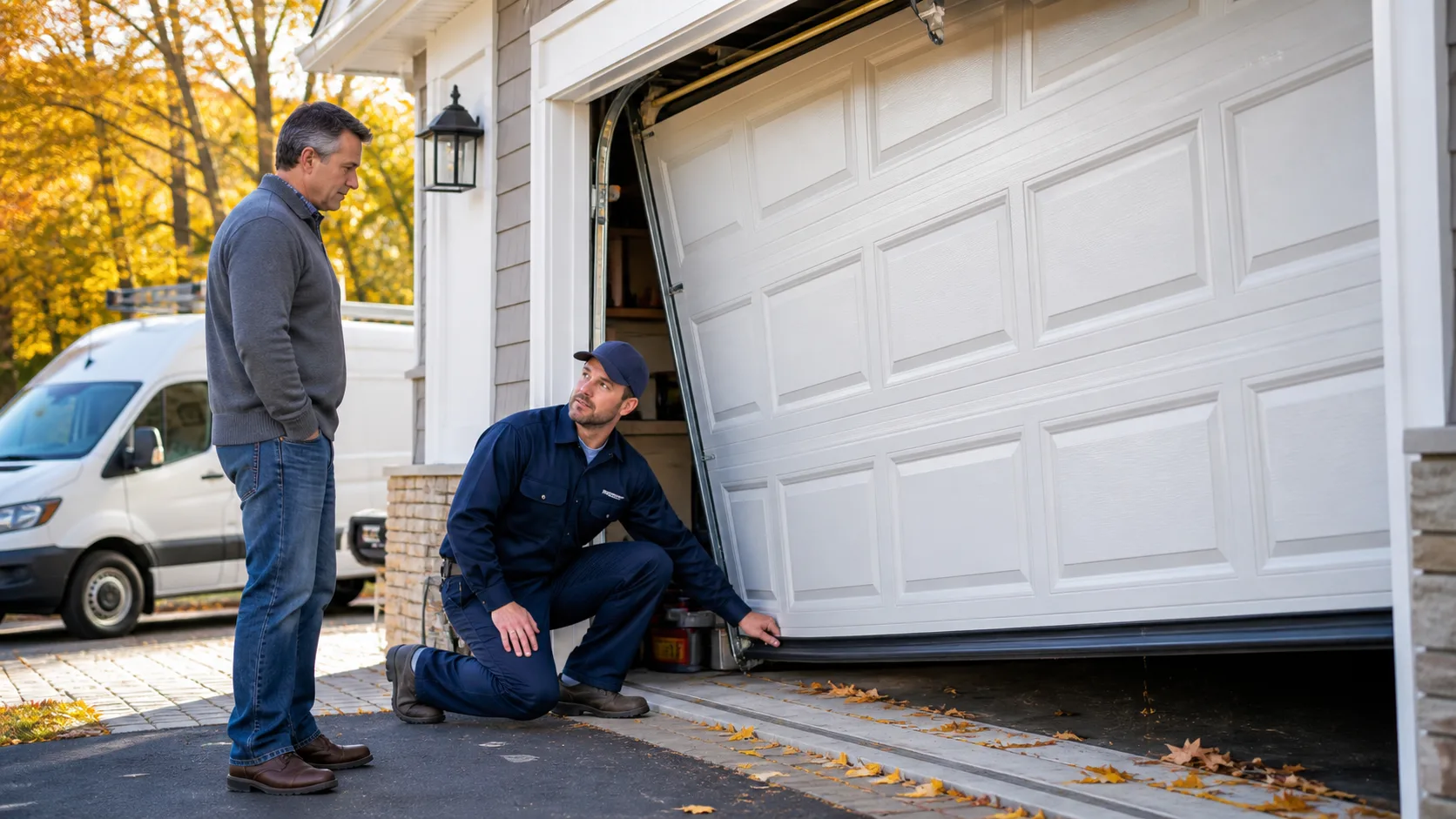
When a garage door looks uneven, it may still open and close for a while. That does not mean everything is working as it should. A door that sits lower on one side or dips in the middle may place extra stress on the opener, rollers, cables, and other moving parts every time it runs.
We often encourage property owners to pay attention to changes that affect everyday use, including:
- A bottom edge that does not sit level on the floor
- Gaps around the sides or bottom of the closed door
- Scraping, popping, or grinding sounds during operation
- A door that moves unevenly or seems to shake
- An opener that sounds like it is working harder than usual
Those symptoms can affect security and comfort, too. Gaps may let cold air, moisture, pests, and wind-driven snow into the garage. If the door binds or sticks, you could also find yourself unable to get a vehicle out when conditions outside are at their worst.
Addressing an alignment concern in the fall can help reduce the chance of a larger breakdown during winter.
Spot the Warning Signs Behind a Sagging Garage Door
A sagging garage door may show itself in several ways. From outside, you may notice a dip in the center of the door or a bottom edge that looks tilted. From inside the garage, one side may appear lower than the other when the door is fully closed. These are useful observations to share with a technician, but high-tension parts should never be touched or adjusted on your own.
Several issues can cause a door to lose its even support. Depending on the type and condition of the door, we may find concerns such as:
- Worn or frayed lift cables
- Damaged rollers or bent tracks
- Loose hinges or hardware
- Weak or damaged door panels
- An improperly balanced door
- Dents, corrosion, or damaged reinforcement parts on steel doors
Wood doors can also change over time when exposed to moisture. Warping, aging panels, and deterioration may affect how the door holds its shape. With steel doors, dents and corrosion can weaken areas that help the door stay aligned.
Movement problems often appear alongside the visible sag. The door may jerk as it travels, scrape against a track, reverse unexpectedly, or stop before it fully closes. Rather than waiting for the door to quit altogether, we recommend professional overhead garage door repair when these signs first appear.
See How Winter Can Make the Problem More Severe
Cold weather can make an already struggling garage door less forgiving. Metal parts can contract as temperatures drop, and older lubricants may become thicker or less effective. If tracks, rollers, or hinges are already worn or out of alignment, the door may move with more friction during a full opening and closing cycle.
Snow and ice can add another layer of trouble. Water near the bottom seal may freeze at the threshold, creating resistance when the door tries to open. Moisture and road salt can also contribute to corrosion on hardware over time. When a door sits unevenly, it may leave openings where cold air and snow can enter the garage.
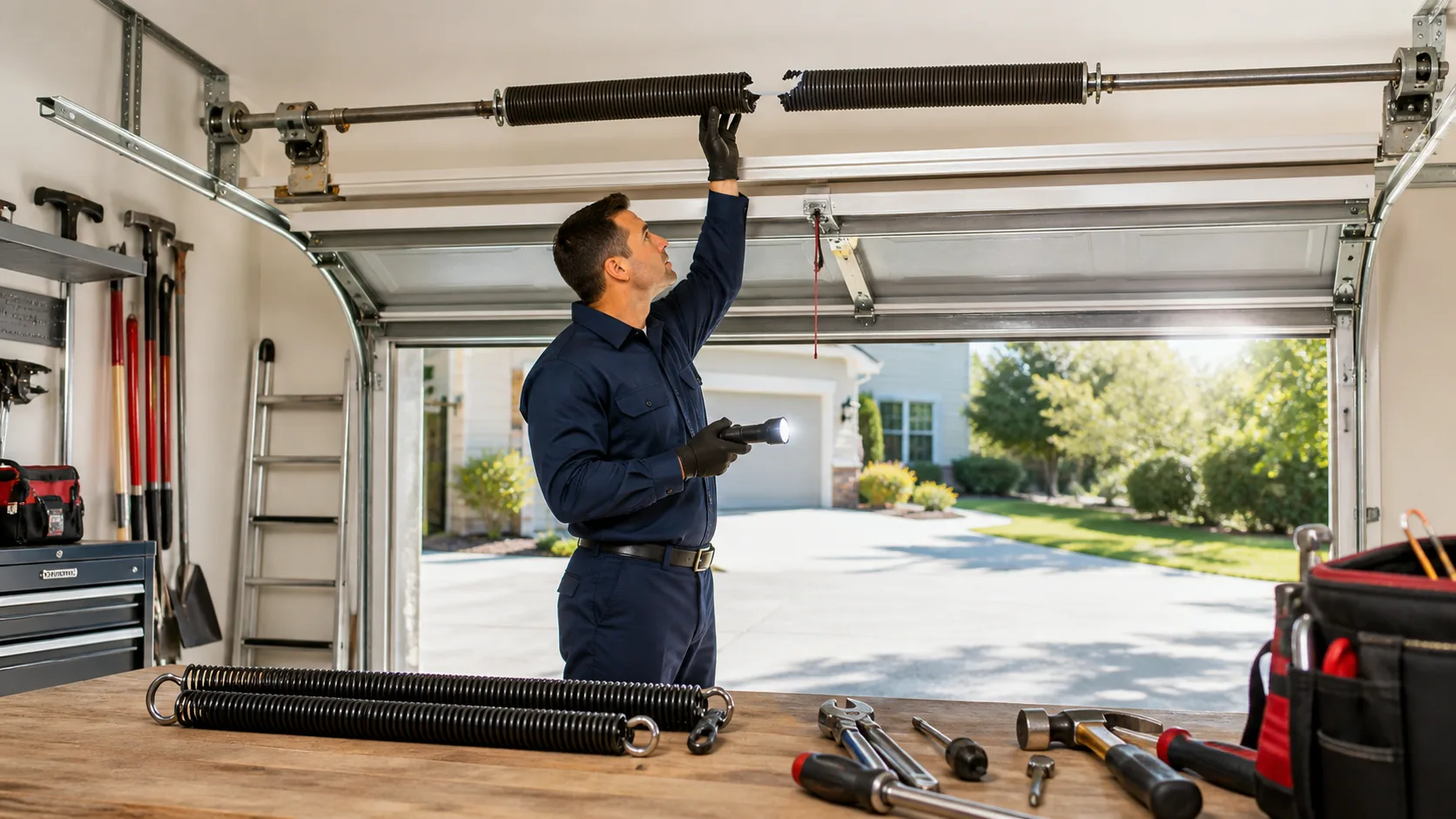
The opener and springs may feel the effects as well. A sagging or unbalanced door can take more force to lift, placing added strain on the opener and increasing wear on cables, rollers, and springs. Springs and cables are under significant tension, so we never recommend trying to adjust them without professional training and proper tools.
Correcting the cause of the sag can help the full system move more smoothly through winter. That may mean addressing a cable, roller, track, hinge, panel, or balance issue before weather conditions make the symptoms more noticeable.
Protect Your Door with Professional Repair and Maintenance
A professional service visit starts with finding out why the door is sagging. The visible dip or tilt is often only one part of the problem. We inspect the moving components and the door itself to determine what is affecting safe operation.
During an evaluation, our technicians may check cable condition and tension, inspect springs, test the door’s balance, examine tracks and rollers, tighten hardware, and look for damaged panels or reinforcements. This helps us identify whether the concern is limited to a particular component or whether the door has structural damage that needs broader attention.
The right repair depends on what we find. Some doors need roller, hinge, cable, or track service. Others may need panel repair, reinforcement, or replacement. If a door is severely damaged, structurally compromised, or nearing the end of its useful life, replacement may be the safer long-term choice.
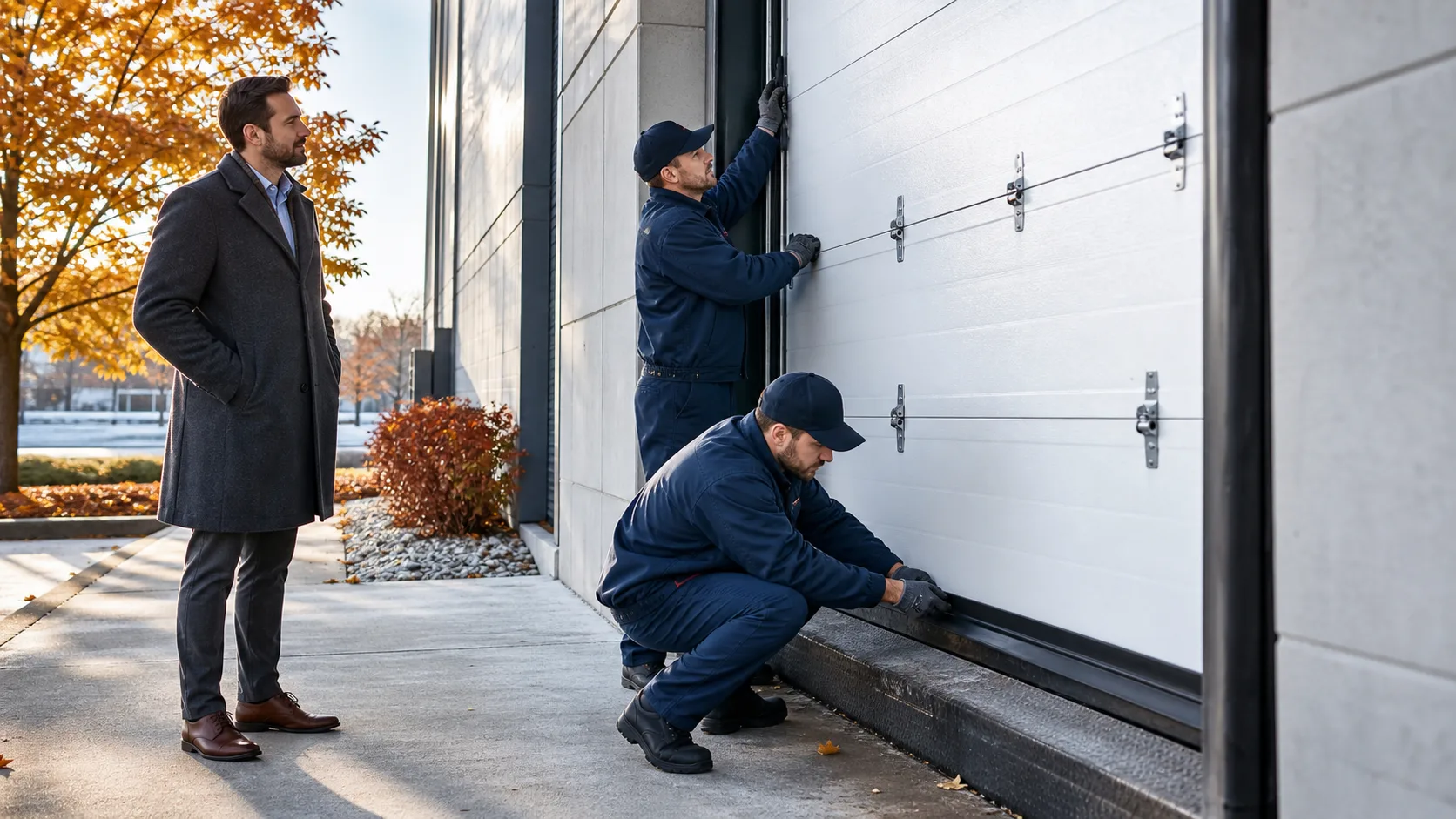
Preventive maintenance can also uncover smaller concerns before they interfere with daily access or weather protection. We provide residential and commercial garage door installation, maintenance, repair, and emergency service across our local service area, helping property owners prepare their systems for the demands of winter.
Plan Pre-Winter Garage Door Service
A sagging garage door is not a problem to put off until the first major snowfall. Early attention can help restore smoother movement, reduce strain on the opener, and improve the seal around the opening. If your door looks uneven, makes unfamiliar sounds, binds as it moves, or leaves visible gaps when closed, a professional inspection can identify the cause before winter conditions add to the stress.
The practical takeaway is simple: treat a sagging door as an early warning sign. Addressing it before freezing weather arrives can help protect access to your garage and support safer, more dependable operation throughout the season.
Restore Reliable Garage Access
Barlett Overhead Door can assess the cause of the problem and provide dependable overhead garage door repair tailored to your door’s needs. Our team focuses on safe, lasting solutions that help your door operate smoothly when you need it most. To arrange service, contact us today.